7 Best Alternatives for Tesla EV Home Chargers
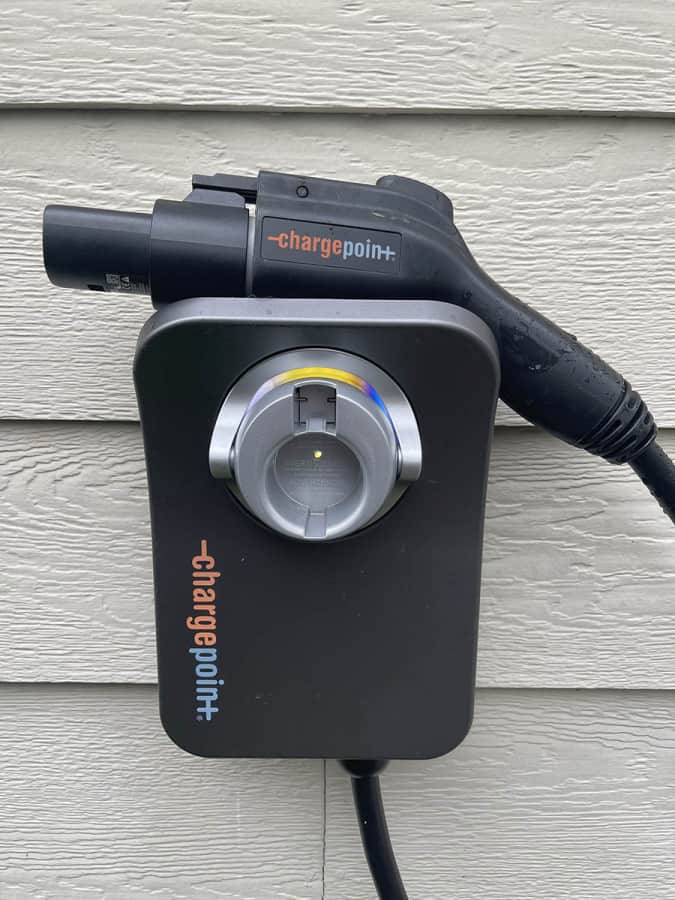
Tesla electric vehicles are known for their lower carbon footprint and reduced fuel expenses. Besides getting the most out of the advanced tech featured in these vehicles, Tesla owners also enjoy not having to rely on conventional gas stations. The most convenient way to charge a Tesla for most owners is at home with a Level 2 charger. The best Tesla EV home chargers are compact, Wi-Fi compatible, allow smart charging, and work with indoor and outdoor installations. They are weather-resistant and can prevent overheating. They’ll come with lights for monitoring the charge status and long cables for flexible mounting. Read on for comprehensive reviews of the best alternatives for Tesla EV home chargers available on the market. Note: These are recommendations for J1772 Level 2 chargers. You’ll need a a Tesla J1772 adapter in order to charge your Tesla with these units. If you don’t feel you have a need for a J1772 connector, strongly consider the Wall Connector from Tesla. ChargePoint Home Flex The ChargePoint Home Flex tops the chart of the most popular EV chargers. This charger is designed to produce up to 50 Amps, a feature that edges out its alternatives, mostly rated 32 Amp or 40 Amp. Therefore, this product offers fast, high-powered charging. With that rating, you can rest assured that this charger will power your Tesla car to the maximum level. The charger offers a 23 ft (7.01 m) cable and can come with either the NEMA 14-50 plug or the NEMA 6-50 plug. Additional selling points include a Wi-Fi compatible, smart-charging function, an integrated holster that swivels up when you remove the charger’s connector, a tapered edge for easy return, and backlighting for comfortable use in poorly lit installations. MSRP: $699 JuiceBox 40 The JuiceBox 40 deserves a distinction as one of the best EV chargers on the market. This electric vehicle charging station (EVSE) checks all the essential boxes: it’s compact, high power, Wi-Fi enabled, portable, and comes with a 25 ft (7.62 m) cable for flexible mounting. You can also schedule the JuiceBox 40 to charge at off-peak times. It produces 40 Amps, reducing charging times, and it’s a plug-in EVSE, making installation easy and quick. Earlier on when JuiceBox first started, they weren’t UL certified, but today they are both UL and Energy Star certified. MSRP: $629 Morec EV Charging Station The Morec EV level 2 charger can supply up to 240V and is quite versatile – it’s compatible with indoor and outdoor installations and works for all EVs. The charger has a crystal-clear display, making it easy to read, and the power leveler comes in handy for maintaining balance during multiple charges. Other pros include leak-proof construction that also minimizes overheating and a waterproof build that prevents water damage. You’ll never go wrong on safety with the Morec EV Charging Station. The gripe? The charger’s connector is a little stiff on some EV models – you may need to apply extra force to set it up in such cases. Siemens VersiCharge Home Charger If you’re looking for convenient EV charging, then the VersiCharge Home Charger is what you need! This charger comes with an adjustable start time that allows you to set the time your EV will start charging. Better yet, the indicator halo lights enable you to monitor the charging status from a distance. Reviewers point out the Universal version of this charger is a plug-and-play solution that works indoors and outdoors. Controlling the Smart Grid version of the charger is a breeze since it’s Wi-Fi enabled and can be controlled remotely using an Android or iOS device, and the hardware version is designed for indoor applications. It comes with a 14 ft (4.67 m) cable, while the other two feature 20 ft (6.1 m) cables. ClipperCreek HCS-40P ClipperCreek is well-known for producing some of the most durable and reliable EV chargers, and the HCS-40p is no exception. This charger comes in as a plug-in or hardwired unit and produces 32 Amps. The charger comes with a 25 ft (7.62 m) long cable for versatile mounting. The external casing is rated NEMA-4, meaning it’s designed to withstand harsh elements. The remote connector holster is also easy to locate – you can quickly find the charge port from pretty far away. The dual-connector construction means you can charge 2 EVs simultaneously. And, installation is pretty simple, thanks to the long lag bolts included in the package. The outside panel comes with display lights that indicate when the unit has power and when it’s charging, and two trouble lights that show when the charger is faulty. Blink HQ 100 The value-priced HQ 100 EV charger comes with a handy hook for easy installation and usage. Wider than other high-end charging stations, the HQ 100 comes with a control panel and a button that allows you to delay the start of charging. But there are even more selling points. For example, the charger is categorized as level 2 and produces 30 Amps, meaning it’s six times faster than the standard chargers that come with most vehicles. I also find the automatic resumption of charging after a power outage as an impressive feature worth mentioning. For safe mounting, the package includes a wall-mounting bracket. The stylish yet simple design allows you to use the charger without an application or home network. The cons? Non-Tesla electric vehicles won’t benefit from the high amperage since most of them can’t funnel higher currents. Bosch Level 2 EV Charger If you’re looking for a solid charging station, then the Level 2 EV charger from Bosch will never disappoint! The charger comes with a sleek, compact design and is made for any EV that meets the J1772 standard. That Bosch pushes the envelope in the production of high-end charging stations is evident in the charger’s NEMA 3R enclosure that’s weather-resistant and versatile and the product’s high-quality features that exceed international standards. The charger comes with a thermal sensor that prevents overheating and LED lights that
7 Best Alternatives for Tesla EV Home Chargers Read More »