Automotive

Wiring My M1101 Military Trailer — Here’s the Clean 7-Pin Setup

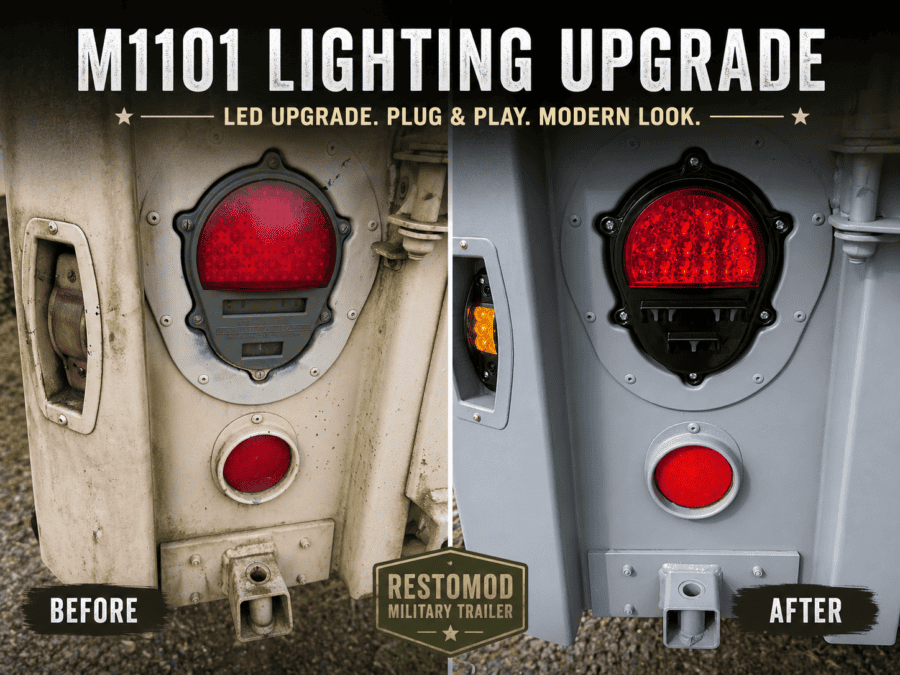
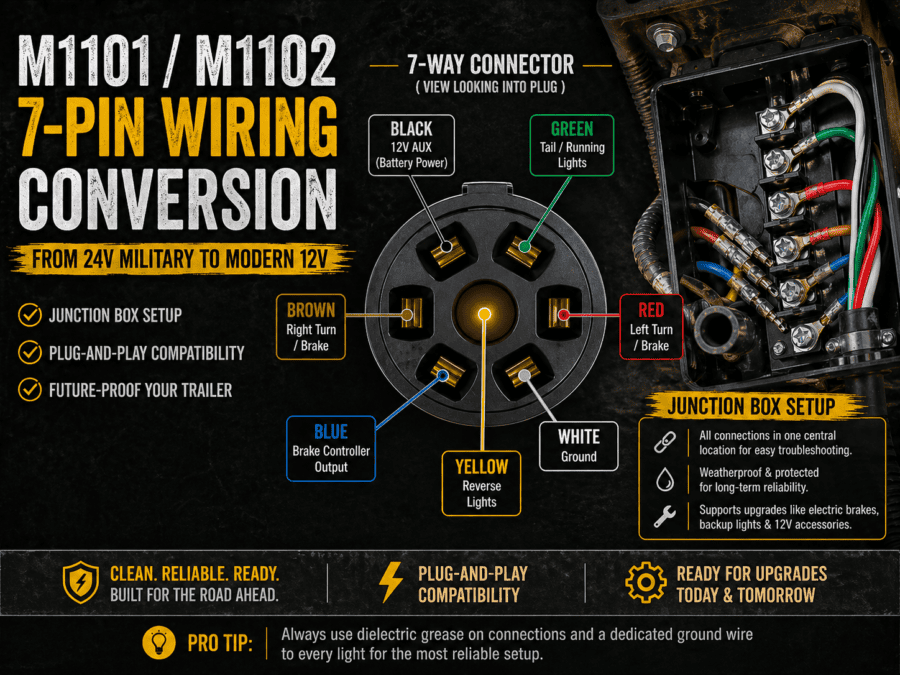
For just about everyone who picks up a military trailer, if it was purchased at a military auction you’ll find it was wired for 24 volts, the native voltage system of the HUMVEE. The first thing you’re likely looking to do is make it compatible with your civilian tow vehicle (unless you have a military HUMVEE to pair it with). One positive is you don’t have to rewire the entire trailer. When I picked mine up from auction, I brought several zip ties knowing my magnets on my magnetic tow lights wouldn’t help much on the aluminum box of the M1101. There actually seemed to be decent mounting places on the steel frame, but I still used zip ties to ensure the temporary tow lights didn’t fall. Adapters Now, there are some adapters out there, however, the general consensus is they are rather over-priced for what they are. If they’re in your budget and you want to the fastest solution, these adapters might be your best choice. Most use the 4-pin flat. I’ve also seen some 7 blade harnesses on eBay that a seller has made themselves, crimping on some packard connectors (also called shell connectors) that will plug right in to the existing quick disconnects. Then, you just have to bolt down the ground wire for the new harness. I went with the Conntek 10110-124BX 7-Way Cord & Wired Junction Box, 10.3′. For most vehicles, I wouldn’t recommend going any shorter assuming you plan to connect at the quick disconnects of the trailer. Splicing in a Harness I opted to splice a new harness myself and also went with a junction box. I considered using packard connectors, but they don’t seem readily available and more I searched for them it sounded like they weren’t used that often anymore, replaced by a new, more modern harness option. Not far from the front of the trailer box, you’ll find the packard connectors. These are quick disconnects and you’ll be able to completely remove the original 12-pin harness. From here, you have a few different options. M1101/2 Junction Box Wiring 7-pin (7-blade) junction box setup—this will also give me future expansion for possible camping lights, rock lights, or even a small battery setup. Original M1101 Wiring Harness The factory setup includes: It’s durable—but not practical. You can adapt it… but after digging into it, I realized: Rewire vs. Adapter You’ve got two paths: Option 1 — Rewire at the Packard Connections (What I Did) ✔ Clean✔ Reliable✔ Upgradable Option 2 — Adapter ✔ Quick plug and play – no splicing✔ Retains originally 12-pin harness✖ More expensive The Setup I Went With (Simple + Future-Proof) Here’s what I installed: This gives me: The Wiring Diagram (What Connects Where) This is the standard 7-pin layout I used: White → Ground – I ran a ground wire from the junction block to the existing ground near the disconnectsBrown → 22 460 Running lights Red → 22 461 Left turn / brake Green → 21 A Right turn / brake Inside the junction box, each of these wires gets its own terminal—making everything clean and serviceable. Grounding If your lights flicker, dim, or act weird… it’s almost always a bad ground. Again, I simply ran a ground wire from the grounding terminal in the junction box to the same ground location that was near the quick disconnects. Tips to use: This alone eliminates 90% of trailer wiring issues. Bonus: Wire It for Future You Even if you don’t need it yet, a 7-blade junction box is ready for: Trust me—you’ll want these later. Prep Work I ordered my harness several months ago and finally started getting around to installing it. I noticed since then some junction boxes have color coding on them. I decided to buy some oil-based paint markers so I could color code mine. It’s a lot easier than trying to read the raised plastic text. Here’s after I color coded the ends of the terminals with the paint markers. Later, I also added a stripe to the plastic just in case the terminal paint fades or peels off. M1101 12v Conversion For my installation, I ended up cutting the 3 necessary wires and crimped on non-insulated ring terminals. I cut a slit in one of the grommets of the junction box and pulled the wires through. Noticed I also added color-coded zip ties to the original M1101 wiring to match what terminal the wire needed to go to. I figured this was also easier than reading a number code on the metal tags and having to cross-reference it if I ever had to remove them for some reason. Next, it was time to make the connections. Mounting the Junction Box I ended up marking the holes for where I would bolt the junction box. I drilled the holes and then installed rivet nuts (also called riv nuts for short). Some might try self tapping screws, but I’ve found more and more projects where I’m using these rivet nuts. The junction box I purchased had 2 mounting tabs, one on each end. Here’s the first riv nut installed. Mounted and Installed 24V Lights vs 12V You technically can run the stock 24V tail lights. They certainly won’t be as bright since they were designed for twice the voltage. Since mine were mismatched when I bought the trailer, I decided to go with a new pair, but these are the taillights that came on my trailer. Especially in daylight, the passenger side incadescent wasn’t nearly as bright as the LED light that had apparently been swapped in at some point by the military. Running a “trailer light test” from the truck (hence the lights flashing). And here’s the passenger side light which I assume was original to the trailer: I swapped mine to LED HUMVEE replacement lights that were listed as 12V lights, they were made by Hecasa. Time will tell how these perform, but so far so good. When I bought my trailer

Wiring My M1101 Military Trailer — Here’s the Clean 7-Pin Setup Read More »

⚠️ Cybertruck PCS Issue? My PowerShare Failure → “Fixed Itself” → 24A Limit → Rev G Replacement (Full Timeline)

tesla cybertruck pcs2 error

I wanted to share a full timeline of a PCS (Power Conversion System) issue I just went through with my Cybertruck, because the way it failed was not obvious at first. This is certainly an increasingly known issue. This might help if you’re seeing weird PowerShare behavior or charging limitations. ⚡ Phase 1: PowerShare Worked… But Intermittent During a recent outage, I used PowerShare to run the house. It worked, but: My daughter’s were home from school after a closure because of the storm that knocked out power throughout the town. They mentioned the internet was frequently dropping and lights would occasionally flicker. I reached out to Tesla, but they recommended I reach out to my electrician. No response from my electrician, so I decided to see if I could get anywhere with Tesla again. ⚠️ Phase 2: “Unable to Charge” Error (Weeks Later) A few weeks later I got: “Vehicle unable to charge” When I checked the details: 👉 It pointed to a PCS / PowerShare-related fault So I scheduled a service appointment. In the error log, I noticed it had a second PCS2_a095 error that mentioned PowerShare unavailable. 🔄 Phase 3: It Starts Charging Again (False Confidence) Here’s where it gets tricky… I left the truck plugged into my 120V UMC, and about a day later: 👉 It started charging again like normal. So I: In hindsight… probably a mistake. However, I also wasn’t confident with Tesla’s response that they knew what the issue truly was. ⚡ Phase 4: 240V Charging Exposes the Real Issue Several days later, I plugged into a 240V EVSE. Immediately noticed: At that point, I was pretty confident: 👉 PCS issue wasn’t gone—it was just partially failing So I rescheduled service. 🔧 Phase 5: Tesla Replaces PCS (Now “Rev G”) Tesla diagnosed it and replaced the PCS under warranty. Apparently they’ve updated this component multiple times. Ideally this will be a permanent fix. I’ve heard this is several thousands of dollars to fix if out of warranty. 🧠 What Made This Hard to Catch This wasn’t a clean failure. It: 👉 It gave just enough normal behavior to second-guess the issue. 🔍 Key Symptom to Watch For If I had to call out the biggest red flag: Charging capped at 24A on 240V That seems to be a strong indicator something isn’t right with the PCS. 🛠️ Where I’m At Now (2 Weeks Later) I’m about 4 weeks into the new Rev G PCS: But I’m definitely watching it closely. 🔁 What I’m Doing Differently Now Going forward: 💡 Takeaways for Other Owners If you’re seeing anything weird: Tesla had asked me several questions when I first contacted them. They asked if there were any other accessories I had installed on the truck, if I had used the power receptacles in the vault for anything, etc. My rescheduled appointment was nearly a month out. It certainly seems they are more aware of the issue now. Many feel this should be a recall, I definitely agree with the number of failures that seem to continue to pop up.

⚠️ Cybertruck PCS Issue? My PowerShare Failure → “Fixed Itself” → 24A Limit → Rev G Replacement (Full Timeline) Read More »

Cybertruck Integrated Central Control Storage Box Installation & Review (TesStudio / CyberGearCo)

Ongoing Review: Fitment, Durability, Noise & Storage Performance Over Time Cybertruck Integrated Central Control Storage Box: Installation, MOLLE Integration & Ongoing Review The Tesla Cybertruck features some of the most unique interior design choices of any modern vehicle—and while the center aisle area is spacious, it’s also underutilized. After experimenting with different organization options and MOLLE accessories, I finally purchased the Integrated Central Control Storage Box from Amazon, a modular center console upgrade distributed by TesStudio, CyberGearCo, and several other vendors. I picked mine up on Amazon during a Black Friday sale for $224.99 (sold by TesStudio under the Amazon name TESCYBERMODS). Today, this organizer typically retails between $269.99–$299.99, depending on the seller. Currently, there’s a coupon on Amazon bringing the price down to $269.99. This article includes:✔ Full installation steps✔ MOLLE panel mounting details✔ What fits (and what doesn’t)✔ Pros & cons✔ Future modification ideas✔ And an ongoing review section that I’ll update over time—including durability, squeaks, rattles, and storage performance. Why I Upgraded My Cybertruck Center Console I previously added a Foronetry Floor Lower Center Console Mat so I could mount a BuiltRight Industries Tech Panel MOLLE without drilling into Tesla’s OEM interior. I mounted a fire extinguisher using Quick Fist clamps, and while this setup worked, it didn’t offer the organizational structure I wanted. The Integrated Central Control Storage Box fills this space perfectly, adds multiple compartments, and provides an ideal mounting platform for additional gear. It also adds extra storage for phones—but it would have been even better if the manufacturer had included inductive charging, especially given that Tesla’s OEM wireless chargers are known to have reliability issues. Hopefully future revisions include this. Installation Guide for the Cybertruck Integrated Storage Box Installation took me around 20–25 minutes. Here are the official steps from the included manual, followed by my hands-on notes. Installation Steps My Real-World Assembly Notes Instruction reference: Finished install: MOLLE Panel Integration (BuiltRight Industries) After installing the organizer, I re-mounted my existing BuiltRight MOLLE Tech Panel directly onto the new storage box. The process was simple: I originally mounted a fire extinguisher on my MOLLE panel when I previously had this tech plate installed on a Foronetry Floor Lower Center Console Mat, but after a quick test fit, it was clear the extinguisher was too tall for the new console. For now, I swapped to my KC HiLiTES multi-tool flashlight using a Quick Fist mount. I may add a second flashlight or explore alternative MOLLE-mounted accessories. This mod is one of my favorite aspects of the new console—mounting gear to the organizer instead of the factory Cybertruck interior keeps everything reversible and clean. Review: Pros & Cons After Initial Installation ⭐ Pros ✔ Significantly increases usable storage From compartments to phone slots and side pockets, the upgrade makes the Cybertruck’s center aisle far more functional. ✔ OEM-style fit and finish Once assembled, the unit feels sturdy with a clean, factory-like appearance. ✔ MOLLE-friendly mounting surface Perfect for flashlights, tools, radios, or emergency gear. ✔ Straightforward assembly Other than two tight-fitting pieces, the installation is beginner-friendly. ⚠️ Cons & Wish List ❗ No inductive charging included The organizer adds storage for phones—but misses a huge opportunity by not including wireless charging.Given Tesla’s history of OEM inductive charging issues, this would’ve been a major selling point. ❗ Tight tolerances on Parts D & F These sections require patience and extra effort. ❗ Cupholders may go unused Functionally fine, but I’m not convinced I’ll use them often. Future Modifications I’m Planning I’m already considering the next steps: Ongoing Long-Term Review (Updates Coming) Over the next several weeks and months, I will update this article with: Bookmark this page—more updates coming. Final Thoughts (Initial Verdict) At its current price point, especially when discounted, the Integrated Central Control Storage Box is one of the most useful interior upgrades for the Cybertruck. It adds meaningful storage, improves organization, and gives you a solid platform for MOLLE-mounted accessories. While inductive charging would have made the phone slot far better, the overall utility of this upgrade still makes it worth the buy.

Cybertruck Integrated Central Control Storage Box Installation & Review (TesStudio / CyberGearCo) Read More »

✅ XK Glow Cybertruck Light Bar Installation Guide (MX-CTLB)

IMPORTANT: Installation involves wiring into the Cybertruck’s 48V system. If you’re not confident with electrical connections, consider hiring a licensed professional. 🛠️ Tools & Materials Needed: 🔌 Step-by-Step Installation Instructions 1. Test the Light Bar (Pre-install) 2. Access the Roof Power Feed 3. Connect Power Wires 4. Mount the Light Bar 5. Turn On Power Feed 6. Attach Mounting Brackets 7. Secure to the Cybertruck Roof 8. Final Alignment & Tightening 9. Mount the Controller 10. Setup the App & Customize Tip: Change the default mode in the app under Config > Default Mode 🌟 Product Review: XK Glow XKMAX Light Bar for Tesla Cybertruck ⭐️⭐️⭐️⭐️½ (4.5/5) 🔦 Performance: 📲 Smart Features: 🧰 Installation: 🧼 Aesthetics & Fit: ⚠️ Things to Know: I’ll be updating this article with additional tips and photos later, just wanted to make sure I got something posted sooner than later to help anyone considering purchasing this lightbar or looking for additional installation information beyond the Cybertruck XKGlow installation instructions provided by the manufacturer which currently seem to have a broken link from their product listing on their website.

✅ XK Glow Cybertruck Light Bar Installation Guide (MX-CTLB) Read More »

Buying an M1101 Military Trailer

2006 raytheon m1101 military trailer

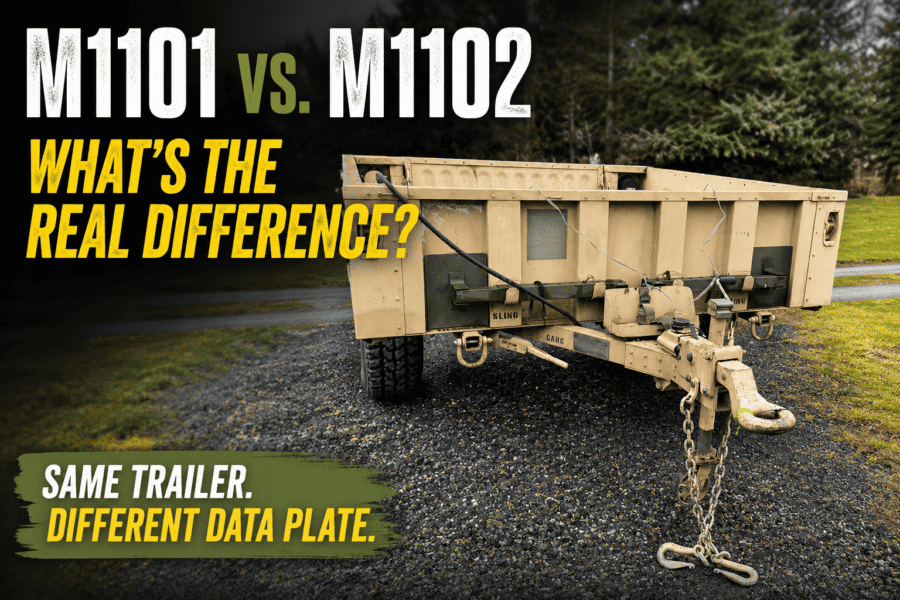
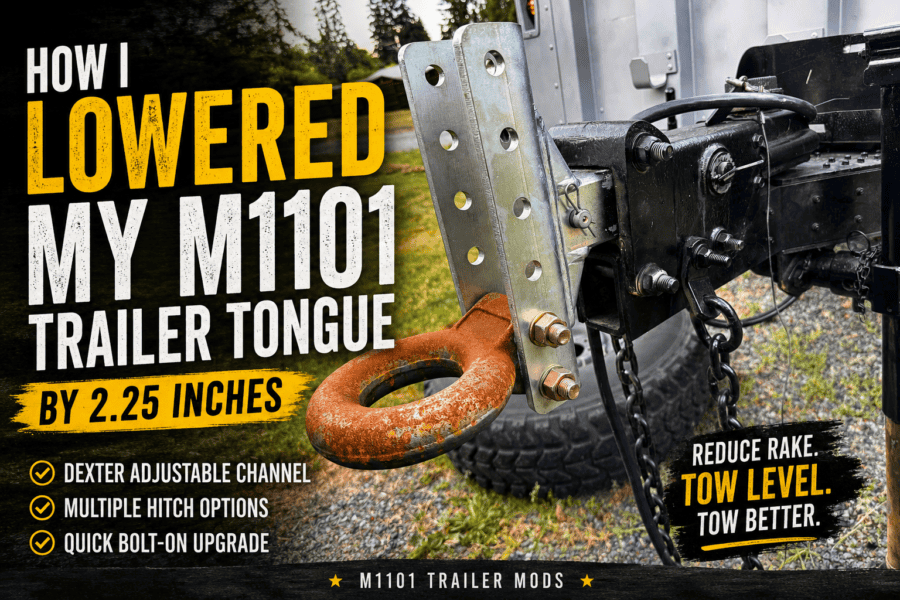
I just picked up my own M1101 from an auction in Oregon. I’ve been looking for one of these trailers for about 4-5 months, but unfortunately, most of them tend to be up for military auction in states like Colorado, Texas, Pennsylvania, and Florida. I missed out on the first one that popped up in Oregon, and when a second became available, I ended up increasing my budget—more than I initially wanted to pay. However, it was still cheaper than what I was finding on other sites such as Craigslist. I also received quotes to have one shipped out of Colorado to Washington state, but those were coming in at $1,300+, quite a bit more than I was willing to pay for shipping. Picking up my M1101 from Auction Most of the trip to get the trailer included temperatures in the low to mid-20s, never ideal for driving an EV, let alone while towing a trailer and also going through mountain passes with elevation climbs. I ended up charging 6 different times on the trip, 4 of which were on the way back. Despite the challenges, the journey was worth it, and I’m excited to share more about this versatile trailer and its potential for civilian use. A Brief History of the M1101 (and M1102) The M1101 trailer was developed as part of the military’s modernization efforts to provide a durable and highly mobile transport solution. Designed to be towed behind the Humvee (HMMWV), it features an aluminum body, independent torsion suspension, and a high ground clearance. These features make it ideal for rugged terrain, allowing it to traverse areas that standard civilian trailers may struggle with. The M1101 has a maximum payload of 2,740 lbs and an empty weight of around 1,460 lbs, making it both lightweight and capable. The M1101 military trailer, originally designed for the U.S. military, has become an increasingly popular choice for civilians looking to build capable off-road and overlanding setups. With its robust construction, high payload capacity, and versatility, the M1101 provides a solid foundation for a variety of outdoor applications. Whether it’s for hauling gear, setting up a mobile campsite, or supporting off-grid adventures, this military-grade trailer is proving its worth in the civilian world. Where to Buy Military Trailers If you’re looking to buy a military trailer at auction, one of the most common places in the United States is going to be govplanet.com. There will also be some of the more common marketplaces for private party sales such as Craigslist, FaceBook MarketPlace, etc. Sites like Trailer Trader may also have postings from time to time. I’ve used Listshopper which pulls results from multiple sites, but at least for these trailers, they primarily tend to be Craigstlist results. M1102 The trailer also comes in an M1102 variant. The consensus online appears to be that they are in fact identical except for the data plate. The M1101 and M1102 are designed for specific Humvee’s, and based on those configurations, some Humvee’s had a higher towing capacity. The data plate merely states which trailer (and load capacity) can be used with a give Humvee. Both models are sold at military surplus auctions. Civilian Uses and Overlanding Conversions Many outdoor enthusiasts and overlanding fans have embraced the M1101 as the base for their adventure trailers. Its large cargo area and high durability make it ideal for customization. Some of the most common civilian uses and modifications include: Rooftop Tent and Rack Systems Many owners install custom rack systems to support rooftop tents, providing an elevated sleeping area away from ground moisture and wildlife. These setups often include annexes for additional covered living space. Solar and Off-Grid Power Solutions Since overlanding often involves extended stays in remote locations, solar panel setups are a popular modification. Mounted either on the trailer itself or on an adjustable rack, these solar setups provide power for refrigerators, lighting, and charging electronic devices. Cooking and Storage Solutions M1101 conversions often include slide-out kitchen setups with propane stoves, storage drawers, and fold-down workspaces. This transforms the trailer into a fully functional base camp for extended trips. Pressurized Water Systems Some owners incorporate water storage tanks with pressurized systems, allowing for showers, dishwashing, and other conveniences while off the grid. These setups often include filtration systems to make water safe for drinking. Challenges and Modifications for Civilian Use While the M1101 is a fantastic trailer, converting it for civilian use does come with a few challenges. 24V to 12V Lighting Conversion Since the M1101 was designed for military vehicles, it comes equipped with a 24-volt electrical system. Most civilian vehicles operate on a 12-volt system. Therefore, most use-cases, the trailer’s stock lighting needs to be replaced or adapted. Many owners swap out the military lights for standard 12V LED lights or use voltage converters to integrate the trailer’s system with their tow vehicle. Height Considerations Another issue with the M1101 is its height. Designed to sit level behind a high-clearance Humvee, the trailer is often much taller than civilian tow vehicles. This can lead to issues with tongue height and towing stability. Many owners modify the trailer by fabricating a drop hitch (either keeping the lunette ring or going to a ball setup), using a raised hitch, and/or swapping out the 37-inch military tires for smaller off-road tires, or even going to other means to lower trailer to a more manageable height. After hooking up, there’s clearly a substantial forward rake with my setup. I ordered a 6″ raised hitch for now and also plan to go down to 35″ tires to match the Cybertruck. Conclusion The M1101 military trailer is a rugged, durable, and highly adaptable platform for overlanding and off-road adventures. While it requires some modifications for civilian use, its ability to handle rough terrain and support extensive customization makes it a favorite among outdoor enthusiasts. Whether it’s for camping or simply hauling gear, the M1101 provides a military-grade solution for any adventure. Step 1 of buying the trailer and

Buying an M1101 Military Trailer Read More »

Creating a Custom Cybertruck Vault Shelf with 3D-Printed Brackets and Milwaukee Packout Wall Mounts

cybertruck custom milwaukee packout vault shelf

The Tesla Cybertruck’s vault provides a massive storage space, but maximizing its usability requires some creativity. I recently designed and installed a custom shelf in the vault using 3D-printed brackets, extruded aluminum, and Milwaukee Packout wall plates. Here’s how I did it and what I learned along the way. Why Build a Custom Shelf? While the aftermarket currently has a couple molle shelf options for the vault, I felt they were a bit pricey at around $500 and didn’t quite provide what I wanted. I was looking at a modular, durable, and efficient way to store tools and gear—enter the Milwaukee Packout system. My goal was to create a shelf that securely mounts Packout wall plates while keeping the vault’s floor space open for larger items. Materials Used The Build Process Step 1: Designing the 3D-Printed Brackets The key component of this build was the custom 3D-printed brackets that attach to the Cybertruck’s L-Track system. Instead of using bolts, I designed a wedge-fit mechanism with slots that securely engage with the L-Track, preventing movement. However, bolts can still be added for extra security if needed. Each bracket was also designed with slots for T-slot nuts and bolts, allowing easy mounting of the extruded aluminum frame. Step 2: Mounting the Extruded Aluminum For the shelf’s structure, I used 2040 extruded aluminum. Initially, I planned to mount it flat, but I found it had too much flex. Switching to a vertical orientation significantly improved rigidity. The aluminum was attached to the brackets using T-slot nuts and bolts, ensuring a strong, adjustable connection. This was the Aluminum Extrusion Hardware Accessories I purchased from Amazon. While the description stated “not easy to rust”, if I see any signs of corrosion I’ll look at getting a different set. Step 3: Installing the Milwaukee Packout Wall Plates With the aluminum frame securely in place, I mounted two Milwaukee Packout wall plates. These provide a rock-solid base for stacking Packout toolboxes, organizers, and storage bins, making it easy to customize my vault storage. Lessons Learned and Future Improvements Current Milwaukee Packout Cybertruck Setup These are the Milwaukee Packout cases I currently have. A 106 piece Milwaukee socket set, drill bit set, and a Packout case I currently store some of my Molle panel mounting accessories in. Final Thoughts One of the biggest advantages of this custom setup is its cost-effectiveness. Compared to aftermarket solutions, which can be quite expensive. If you have access to a 3D printer, this DIY approach with brackets and extruded aluminum was far more affordable while still offering durability and functionality. The modular design, durability, and Packout compatibility make it a game-changer for anyone looking to maximize their Cybertruck’s storage potential. If you’re considering a similar setup, 3D printing custom brackets combined with extruded aluminum and Packout mounts is a solid solution. We’re going to make a few small adjustments to the design, but will likely upload these brackets to one (or multiple) of the 3D file sharing sites such as MakerWorld. Stay tuned for future updates as I refine the design and test its weight capacity! Have Questions or Suggestions? Let me know in the comments! Would you build something similar in your Cybertruck? Also, be sure to check out our other Cybertruck articles!

Creating a Custom Cybertruck Vault Shelf with 3D-Printed Brackets and Milwaukee Packout Wall Mounts Read More »

How to Install a MOLLE Panel in the Tesla Cybertruck’s Frunk

The frunk of the Tesla Cybertruck offers a unique storage space, and adding a MOLLE panel is a great way to keep your gear organized. This DIY project is straightforward and provides a custom solution to making the most of your Cybertruck’s storage. Here’s how I installed a MOLLE panel using quick disconnect fasteners, along with some tips to make the process easier. NOTE: This does require drilling into a factory panel. Materials Used: Step 1: Test fit where you want to install the MOLLE You’ll want to make sure there was enough clearance for the frunk to close based on where you plan to mount the MOLLE panel. I also wanted to make sure there was enough space not to rub at the bottom of the frunk. I took some measurements, but also used small blocks to prop it up at one point to ensure the frunk would close without issue. Step 2: Remove the Frunk Panel The first step is to remove the plastic frunk panel. The panel merely snaps into place. There’s a couple slots at the bottom that can help give you a grip. This gives you full access to the space where the MOLLE panel will be installed. Optionally, you could use a trim removal tool. Step 3: Test Fit the MOLLE Panel Once the panel was removed, I test-fitted the MOLLE panel again to determine the ideal height and positioning. This helped me visualize how the panel would sit and made sure it wouldn’t interfere with the frunk’s operation. Step 4: Mark the Mounting Points I temporarily attached the quick disconnect bolts and used a pencil to mark the drill points on the plastic frunk panel. Taking this step ensures the panel will align perfectly when mounted and that my spacing is correct. Step 5: Measure Twice, Drill Once After marking the drill points, I double-checked all measurements. Once everything was confirmed, I drilled the mounting holes. Remember, accuracy here is key to avoid any alignment issues. Step 6: Attaching the Quick Disconnect Hardware I had some excess threadlocker you’ll see in the picture that was later wiped off. I had some excess threadlocker you’ll see in the picture that was later wiped off. NOTE: Depending on your hole locations, you may need to sand or grind down the honeycomb reinforcement pattern for your hardware to attach flush. A tool such as a Dremel or oscillating tool can work well. In my case, the bolts were quite long and I ended up cutting them down with an angle grinder to the appropriate length. Step 7: Attach the MOLLE Panel With the holes drilled, I installed the panel using the quick disconnect fasteners. To make sure the MOLLE panel stays firmly in place, I used threadlocker on the bolts. This added step ensures a secure hold, even with the Cybertruck’s rugged use. I ended up mounting the quick disconnect fasteners in the corners. This particular fastener type would have required a large diameter hole to be drilled, so I ended up using an existing slot. With the serrated nut surface, it holds tight. If you plan on using a different style fastener including a simple bolt and nut setup, you could probably use one of the existing circular holes to mount. I plan to mount a DIY Not-a-Flamethrower once I get it finished up. I plan to use it for starting camp fires. Final Thoughts This MOLLE panel installation is a simple yet effective way to keep the Cybertruck’s frunk organized. The quick disconnect fasteners make it easy to remove and reattach the panel if needed, providing flexibility for your storage needs. With this setup, I now have a solid, reliable way to secure essential items in the frunk.

How to Install a MOLLE Panel in the Tesla Cybertruck’s Frunk Read More »

Does the Tesla Cybertruck Have Onboard Power?

In an age where versatility and utility are paramount for any vehicle, the Tesla Cybertruck stands out not only for its futuristic design but also for its remarkable onboard power capabilities. Tesla, renowned for pushing the boundaries of innovation, has equipped the Cybertruck with a suite of power outlets that transform it from a mere vehicle into a mobile power station. Let’s dive into the specifics of the Cybertruck’s onboard power system and explore how it can revolutionize the way we use our vehicles. djtzsfrw Power Where You Need It: Inside the Cabin Two 110V Power Outlets The Cybertruck’s interior is a blend of comfort, technology, and utility. Among its many features are two 110V power outlets located strategically for maximum convenience: Powering Up the Outdoors: In the Bed of the Truck The rear bed of the Cybertruck is where its utility truly shines, offering power solutions that are perfect for outdoor enthusiasts, contractors, and adventurers alike. Two 110V Power Outlets Located in the bed of the truck are two more 110V outlets. These outlets are designed to handle a variety of tasks: One 240V Outlet In addition to the 110V outlets, the Cybertruck also features a powerful 240V outlet. This high-capacity outlet is a game-changer for several reasons: The Future of Mobility and Utility The Tesla Cybertruck’s onboard power system exemplifies how vehicles are evolving to meet the diverse needs of modern users. By integrating multiple 110V outlets and a 240V outlet, Tesla has ensured that the Cybertruck is not just a mode of transportation but a versatile tool for work, recreation, and exploration. This feature, combined with the Cybertruck’s impressive range, durability, and performance, positions it as a leader in the future of electric vehicles. Whether you’re on a job site, at a remote campsite, or simply on the go, the Cybertruck’s onboard power system offers unparalleled convenience and capability, making it a true power hub on wheels. So, next time you consider what your vehicle can do for you, think about the Tesla Cybertruck. It’s more than just a truck; it’s your mobile power station ready to handle whatever you throw its way.

Does the Tesla Cybertruck Have Onboard Power? Read More »

Cybertruck Off-Road Package Update: Master the Roughest Terrain

cybertruck off-roading with off-road mode

Tesla’s Cybertruck has been turning heads since its debut, and the latest off-road package update promises to elevate its rugged capabilities even further. For adventurers and off-road enthusiasts, this update introduces a suite of new features designed to enhance the Cybertruck’s performance on challenging terrains. Here’s a closer look at what’s new. A week after we took delivery our Cybertruck, we received an over-the-air software update that included the initial release of the off-road package. Here’s what it currently includes! Overland Mode: Steady Handling Across Varied Terrain The Overland Mode now boasts advanced features to provide more consistent handling and better overall traction. Whether you’re navigating rock-strewn paths, gravel roads, deep snow, or sandy trails, the Cybertruck’s enhanced Overland Mode is designed to keep you steady and in control. The updates ensure that the vehicle adapts to different surfaces, improving grip and stability for a smoother ride. Baja Mode: Ultimate Control and Flexibility For those who crave high-speed off-roading thrills, the updated Baja Mode delivers. With vehicle balance optimization and freer handling when Stability Assist is set to manual, drivers can now enjoy a more dynamic driving experience. The new Terrain slider allows for fine-tuning of the vehicle’s performance across various off-road conditions, giving you the ultimate control to tackle everything from dunes to desert tracks. Locking Differentials: Conquer the Unconquerable One of the standout additions to the Cybertruck’s off-road arsenal is the inclusion of locking differentials. This feature is crucial for traversing uneven or slippery terrains where a wheel may lose traction. By engaging the locking differentials, the Cybertruck can distribute power more evenly across all wheels, helping it move through low-traction environments effortlessly. To use the locking differentials, you can select from options available in the vehicle status area or through the Off-Road app on the touchscreen. This feature is not only essential for hardcore off-roading but can also be beneficial in everyday scenarios, such as getting unstuck from a snow bank. However, it’s important to use caution—engaging the locking differentials on high-traction surfaces like asphalt can damage the drivetrain. Always refer to the Owner’s Manual before utilizing this feature. Trail Assist: Focus on Steering Trail Assist is designed to maintain a steady cruising speed on rough or steep terrain, allowing you to concentrate on steering. Unlike traditional cruise control, Trail Assist stays active even when you brake, resuming the set speed as soon as you release the pedal. This feature can be adjusted via the right scroll wheel, making it easy to control your speed without taking your eyes off the path ahead. To enable Trail Assist, navigate to Controls > Dynamics > Off-Road Mode > Trail Assist. Remember, this feature does not automate steering or obstacle avoidance, so remain vigilant and ready to take immediate action. Refer to the Owner’s Manual for detailed instructions on using Trail Assist effectively. Conclusion With these updates, Tesla’s Cybertruck off-road package is more capable than ever. The enhanced Overland Mode, new Baja Mode, locking differentials, and Trail Assist collectively make this vehicle a formidable force in any off-road scenario. Whether you’re tackling rocky trails, sandy deserts, or snowy paths, the Cybertruck is equipped to handle it all. Embrace the adventure with confidence and enjoy the unparalleled performance of Tesla’s latest innovations.

Cybertruck Off-Road Package Update: Master the Roughest Terrain Read More »

How to Clean Finger Prints from Cybertruck Stainless Steel

cybertruck finger prints

Cleaning your Tesla Cybertruck requires special attention to maintain its appearance, particularly due to its stainless steel panels. Unfortunately, finger prints on the exterior of the Cybertruck have been a common complaint. Finger prints on the Cybertruck often come from people opening and closing the doors. Here’s a quick guide based on Tesla’s recommendations: Cybertruck Finger Prints: Recommended Glass Cleaner While some have used and been happy with liquid glass cleaners such as Windex, many more have gone with an ammonia free foaming glass cleaner from Sprayway. I was first introduced to this product when I had the windows tinted on my first truck many, many years ago. Sprayway seems to continue to be a top choice amongst tint installers. The foaming solution will not run down the sides of your vehicle nearly as much as a liquid glass cleaner. Spot Cleaning the Cybertruck Additional Tips: By following these steps, you can effectively remove fingerprints and small stains from your Cybertruck, keeping it looking sleek and new. There are other products such as Bar Keeper’s Friend people have used, but a glass cleaner often works for most smaller cleaning touchup jobs. We’ll have more soon on recommendations for cleaning the entire exterior of the Cybertruck. Be sure to check out more of our Cybertruck content!

How to Clean Finger Prints from Cybertruck Stainless Steel Read More »